Guide
Walk-In Cooler Not Holding Temperature: What It Means and What to Do
A walk-in that won't hold temperature risks your whole inventory fast. How to triage the failure, protect product, and get the right repair.
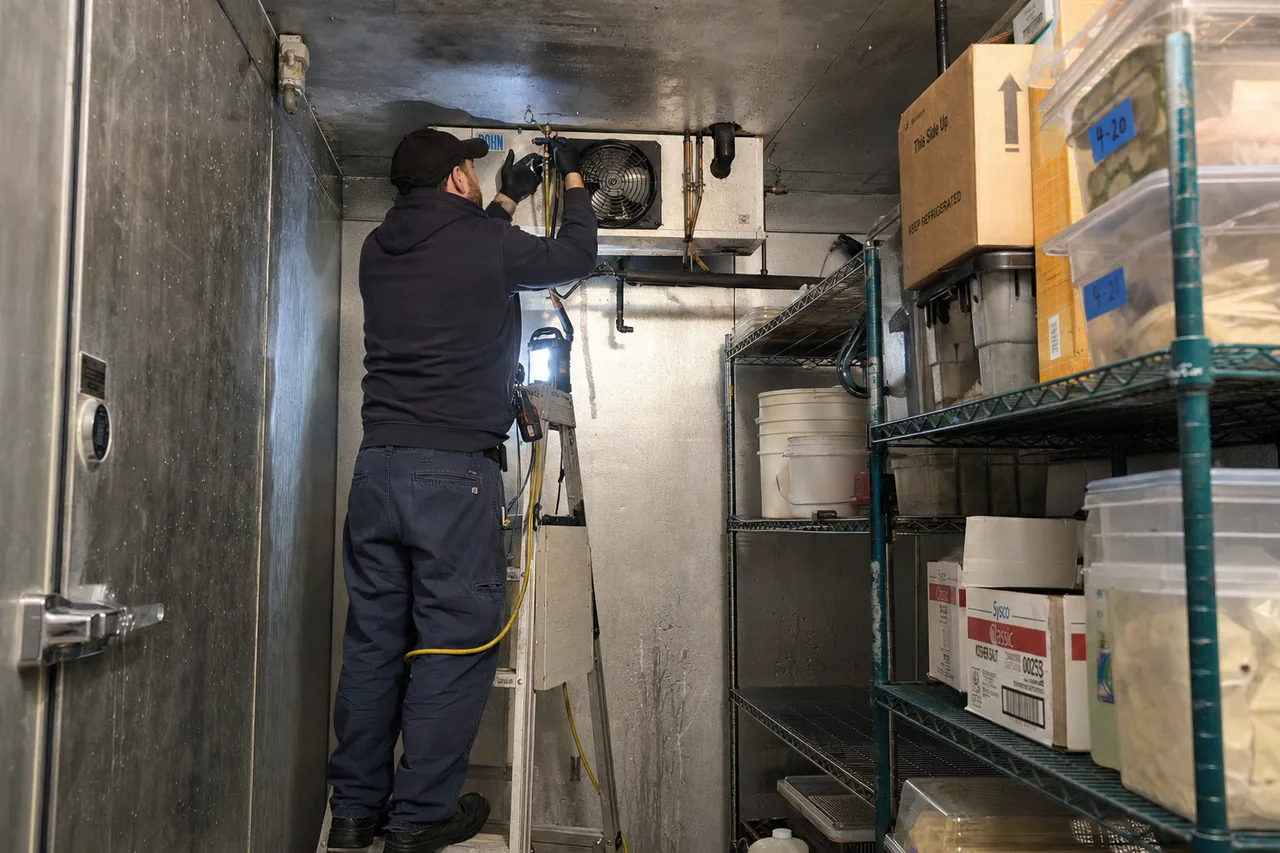
A walk-in cooler or freezer holds more inventory than anything else in your kitchen, so when the box starts drifting warm, the clock is already running on thousands of dollars of product. The good news: most walk-in temperature problems trace to a handful of causes, and knowing which one you’re looking at helps you protect your inventory and get the right repair fast.
First, protect the product
Before anything else, keep the door shut. Every time it opens, warm, humid air pours in and the system falls further behind. If it’s a freezer, or if the temperature keeps climbing, start planning to relocate the most critical product to another unit. Then call for service — a down walk-in is an emergency because loss compounds every hour, not a next-week appointment.
Note two things for the technician: is the condensing unit actually running, and is the evaporator coil inside the box iced over? Those two observations narrow the diagnosis before anyone arrives.
Is it the rooftop unit or the box inside?
A walk-in is a split system, and the fault can be at either end:
- The condensing unit (often on the roof or in a back mechanical room) — a coil packed with dirt and grease drives up head pressure until the system can’t reject heat; a failed condenser fan motor or contactor stops it cold; or the compressor itself fails.
- The evaporator inside the box — a failed defrost cycle lets the coil ice into a solid block that blocks airflow, or the evaporator fan motor quits and cold air stops circulating.
- The sealed system — a refrigerant leak slowly starves the system so it runs constantly but never reaches temperature.
- The door — a torn gasket, a failed sweep heater, or a broken closer lets warm air infiltrate faster than the system can keep up, and on freezers it shows up as ice around the frame and floor.
A unit that’s running but warm usually points to a dirty condenser, a refrigerant issue, or an iced evaporator — not necessarily a dead compressor. That distinction matters, because replacing a compressor when the real fault is a defrost timer or a leaking evaporator coil wastes money and time you don’t have.
Why walk-ins seem to fail at the worst time
Most Bergen County kitchens run late and open early, so a walk-in typically fails overnight or over a weekend when nobody is watching the temperature. That’s exactly why 24/7 coverage matters — the difference between a minor component repair and a total inventory loss is how fast someone gets there.
Preventing the next failure
- Log box temperatures every shift so a slow drift is caught before product is at risk.
- Keep the condensing-unit coil clean — a fouled coil is the single most common cause of a warming box.
- Inspect door gaskets, sweeps and heaters so the box seals tight and freezer frames stay ice-free.
- Confirm the defrost cycle is working and the evaporator coil stays clear.
- Schedule preventive service on the condensing unit before the busy season.
When to call
If your walk-in is warming right now, don’t wait — keep the door closed and call (914) 350-6776. We run genuine 24/7 emergency service across Paramus and Bergen County, diagnose the full split system from the rooftop unit to the evaporator inside the box, and prioritize down walk-ins so the fix beats the loss. Every repair uses genuine OEM parts and is backed by our warranty.